Soil Mechanics: Graphical Overview for Civil Engineering
Soil mechanics is a core branch of geotechnical engineering in civil engineering. It studies the behavior of soil under loads, including its composition, strength, and deformation properties. Key concepts are often illustrated through diagrams and charts for better understanding.
1. Three-Phase System and Phase Diagram
Soil is typically a three-phase material: solids (particles), water, and air. The phase diagram represents volumes (left) and weights (right) to derive relationships like void ratio, porosity, water content, and unit weight.

These diagrams show partially saturated (three-phase), saturated (two-phase: solids + water), and dry (two-phase: solids + air) conditions.
2. Soil Classification Charts
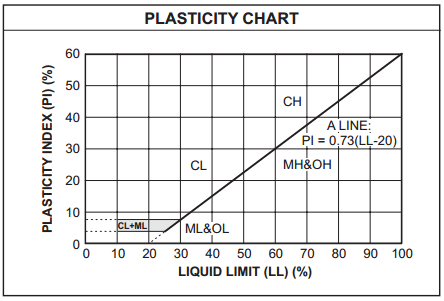
Fine-grained soils (silts and clays) are classified using the Plasticity Chart from the Unified Soil Classification System (USCS). It plots Plasticity Index (PI) vs. Liquid Limit (LL), with the "A-line" separating clays (above) from silts (below).
Atterberg Limits define consistency: Liquid Limit (LL), Plastic Limit (PL), and Plasticity Index (PI = LL - PL).
Coarse-grained soils use grain size distribution curves (below).
3. Grain Size Distribution Curve
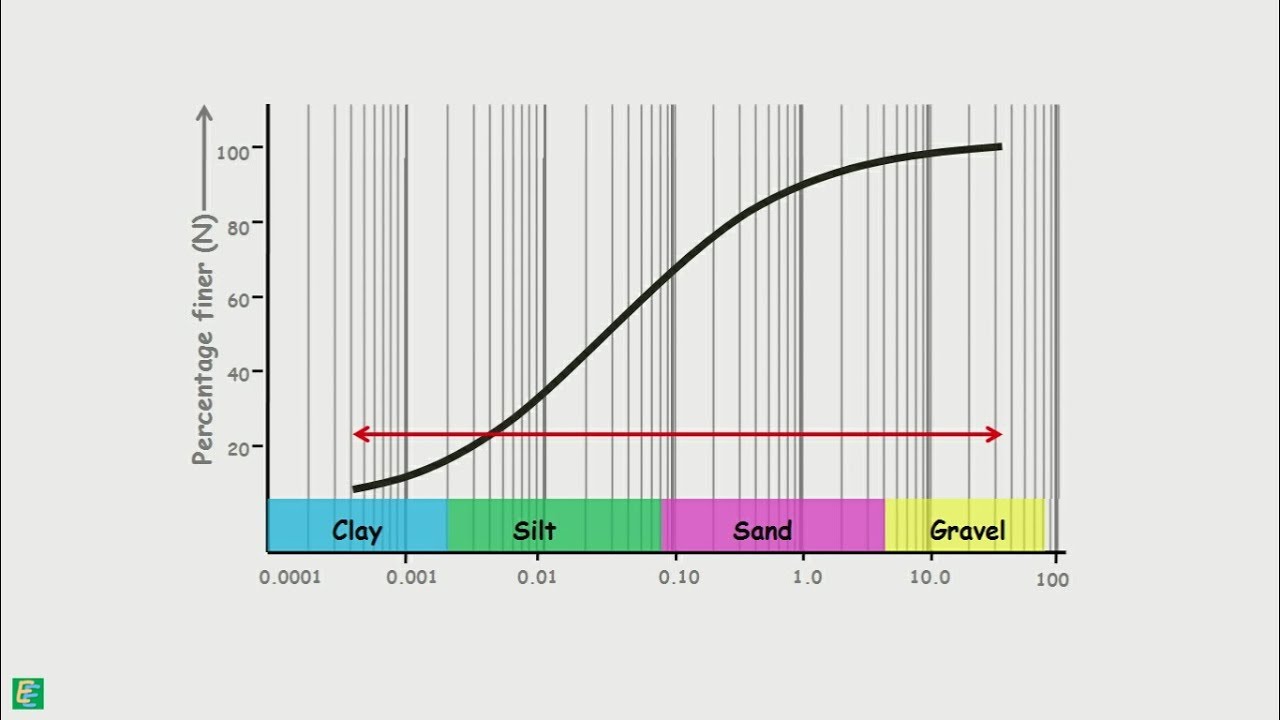
From sieve analysis and hydrometer tests, this semi-log plot shows % finer vs. particle size, determining if soil is well-graded (broad curve) or poorly-graded (steep).

4. Compaction Curve (Proctor Test)
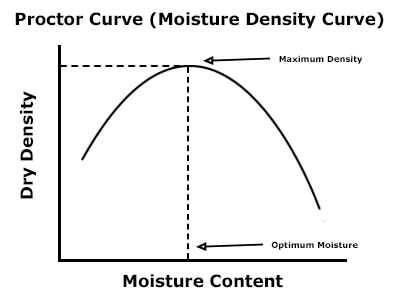
Shows dry density vs. moisture content. Maximum dry density occurs at optimum moisture content; used for embankments and foundations.
5. Shear Strength: Mohr's Circle
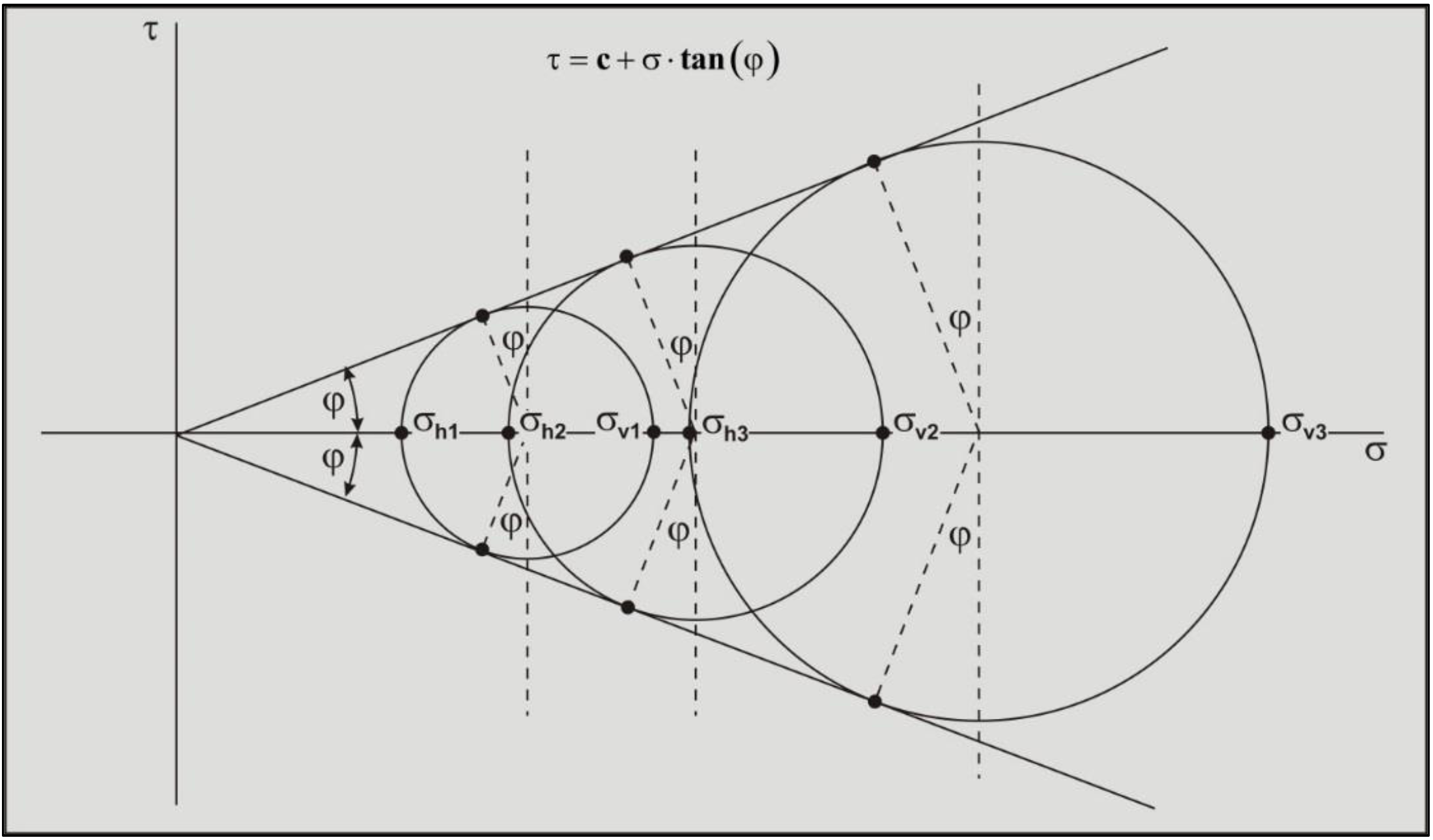
Graphical representation of normal and shear stresses on planes; failure envelope gives cohesion (c) and friction angle (φ).

Overall Concept Overview
While comprehensive mind maps vary, soil mechanics branches into index properties (phase relations, classification), permeability/compaction, stress distribution, consolidation, and shear strength.
These visuals summarize foundational concepts essential for foundation design, slope stability, and earth structures in civil engineering.