Bricks in Civil Engineering
Bricks are one of the oldest and most widely used building materials in civil engineering, valued for their durability, compressive strength, and versatility in construction. They are primarily made from clay (fired or sun-dried) and used for walls, partitions, foundations, pavements, and structural elements like arches or retaining walls.
Standard Brick Dimensions
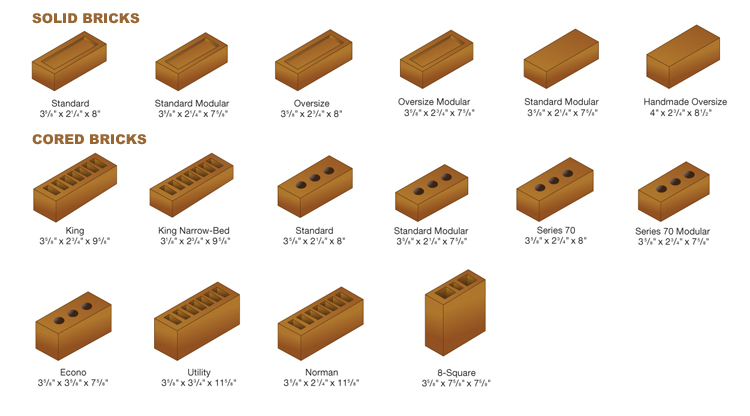
Brick sizes vary by country, but include mortar joints (typically 10 mm) for modular construction:
- India: Actual size 190 × 90 × 90 mm; with mortar ~200 × 100 × 100 mm.
- USA: 203 × 92 × 57 mm (8 × 3⅝ × 2¼ inches).
- UK: 215 × 102.5 × 65 mm.
- Global common (including Nepal/Australia variations): Often around 230 × 110 × 75 mm.
The length is typically twice the width plus one joint for efficient bonding.
Types of Bricks
Bricks are classified by material, quality, manufacturing, and use:
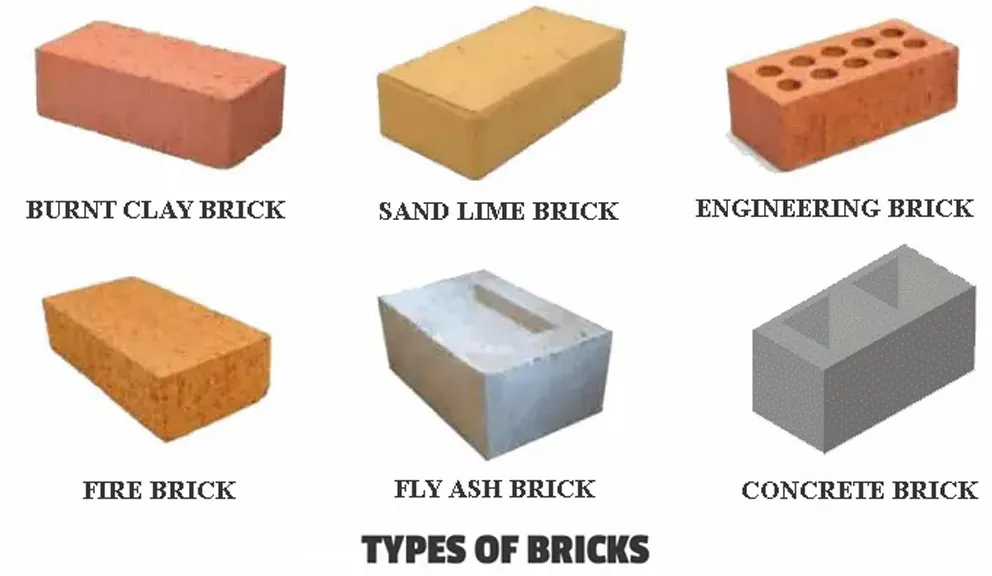
| Type | Description | Common Uses | Key Properties |
|---|---|---|---|
| Burnt Clay Bricks | Fired in kilns; most common. Subclasses: First-class (uniform, strong), Second-class (minor defects), Third-class (rough). | Load-bearing walls, exposed surfaces | High strength, low absorption |
| Engineering Bricks | Dense, low porosity; Class A/B/C (A strongest). | Sewers, manholes, retaining walls, damp-proof courses | High compressive strength (>125 N/mm² for Class A), chemical/acid resistance |
| Fly Ash Bricks | Made from fly ash, cement, sand; eco-friendly. | General construction, lightweight panels | Good strength, lower weight |
| Concrete Bricks | Cement-based; often hollow. | Partitions, heavy-load structures | High durability, fire resistance |
| Fire/Refractory Bricks | Heat-resistant materials. | Chimneys, furnaces | Withstands high temperatures |
| Sun-Dried Bricks | Air-dried clay; low strength. | Temporary or low-load structures | Cheap but not durable |
Properties of Good Bricks
- Compressive Strength: Minimum 3.5–10 N/mm² (higher for engineering bricks).
- Water Absorption: <20% for good quality; <4.5% for engineering.
- Shape & Size: Uniform, sharp edges, no cracks.
- Color & Texture: Uniform red/yellow, pleasant ringing sound when struck.
- Efflorescence: Minimal (no white salts on surface).
Brick Masonry Details
Brick masonry involves laying bricks in systematic patterns (bonds) with mortar (cement/sand or lime-based) to form solid, load-bearing structures.
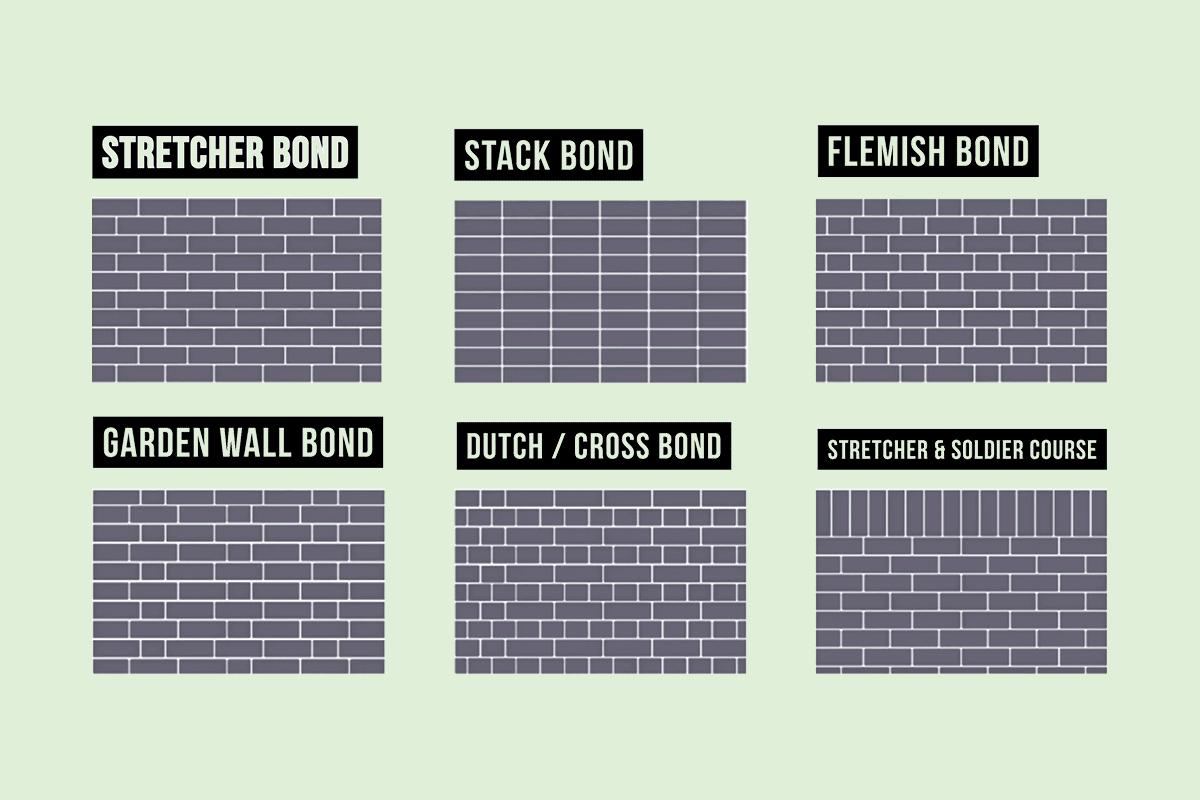
Common Brick Bonds (patterns for strength and aesthetics):
- Stretcher Bond: Bricks laid lengthwise; simplest, for half-brick walls.
- Header Bond: Bricks laid with ends exposed; for full-brick walls.
- English Bond: Alternating courses of stretchers and headers; very strong.
- Flemish Bond: Headers and stretchers in each course; decorative and strong.
- Garden Wall Bond: Variation for visibility on both sides.
Key Construction Details:
- Mortar Joints: 10–12 mm thick; types include concave, flush, or weathered.
- Damp-Proof Course (DPC): Engineering bricks or bitumen layer below ground level.
- Weep Holes: Small openings for drainage in cavity walls.
- Sills & Copings: Sloped brick details at windows/base to shed water.
- Corbels & Soldier Courses: Projecting or vertical bricks for decoration/support.
Brick masonry provides excellent fire resistance, thermal mass, and longevity but requires proper detailing to prevent water penetration and cracking.
For visual examples, here are common types and masonry patterns:
Bricks in Civil Engineering: Key Details
Bricks are fundamental building units in civil engineering, typically rectangular blocks made from clay, concrete, or other materials. They are used for constructing walls, foundations, pavements, arches, and more due to their compressive strength, durability, and fire resistance.
Types of Bricks
:max_bytes(150000):strip_icc()/bricks-types-uses-and-advantages-844819-v4-dfd8be11b5034809aa3d9a2f117ad79b.png)
Standard Dimensions

Brick Masonry Bonds/Patterns
Common bonds ensure structural integrity and aesthetics (e.g., English for strength, Flemish for decoration, Stretcher for simplicity).
:max_bytes(150000):strip_icc()/masonry-brick-bond-common-types-2736655-cf1ec5c2e3fe46ad83252d6dbb551a20.png)

Construction Details
Typical cross-sections and elements like reinforced walls or cavity construction.
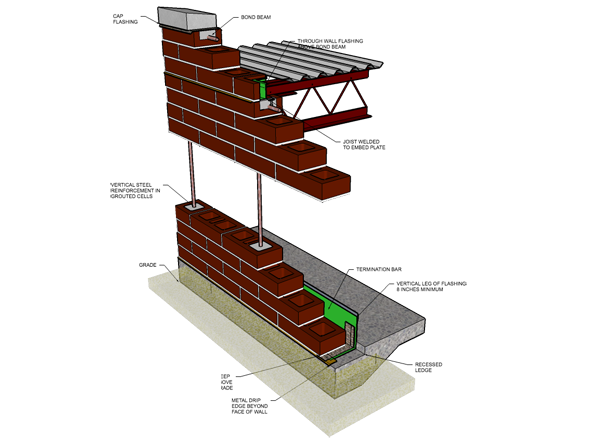
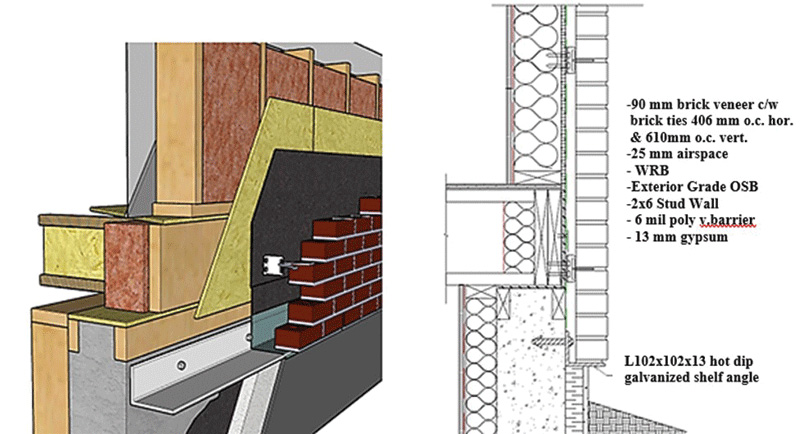
These details cover essential aspects for civil engineering applications, including quality control, bonding for load distribution, and waterproofing features like weep holes in cavity walls.